
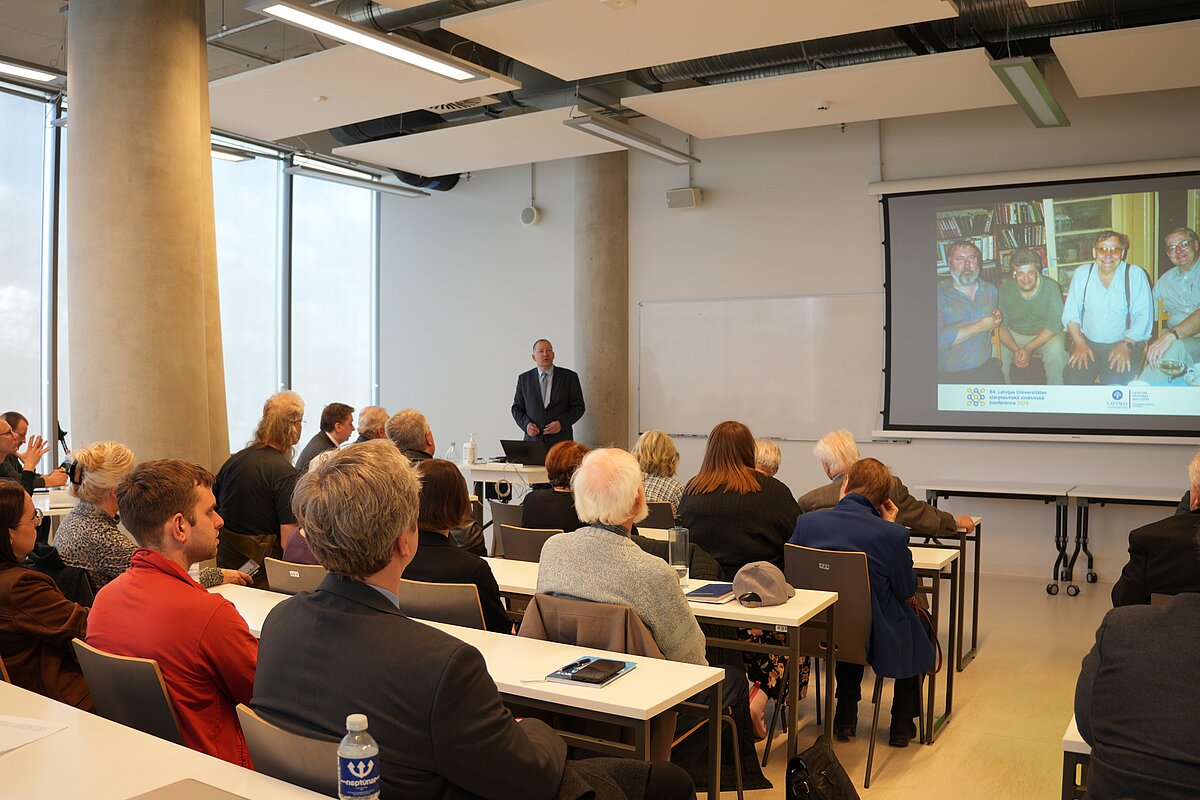
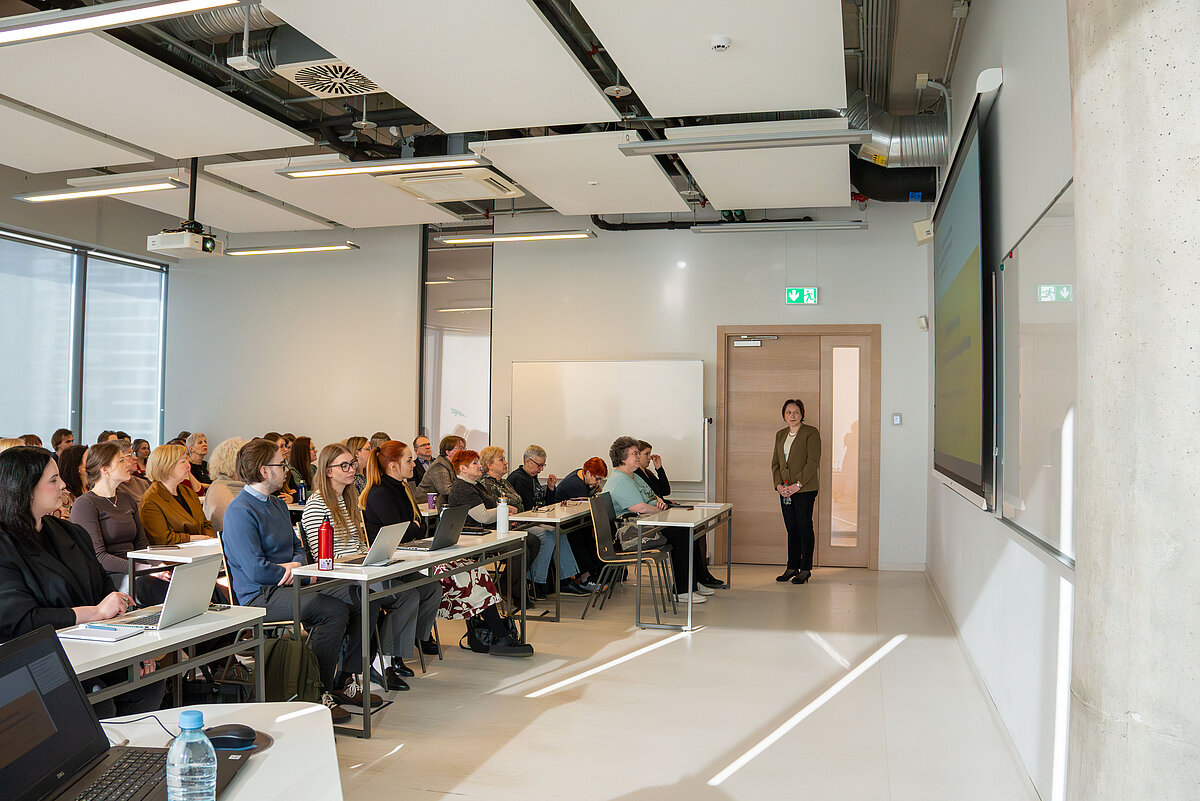
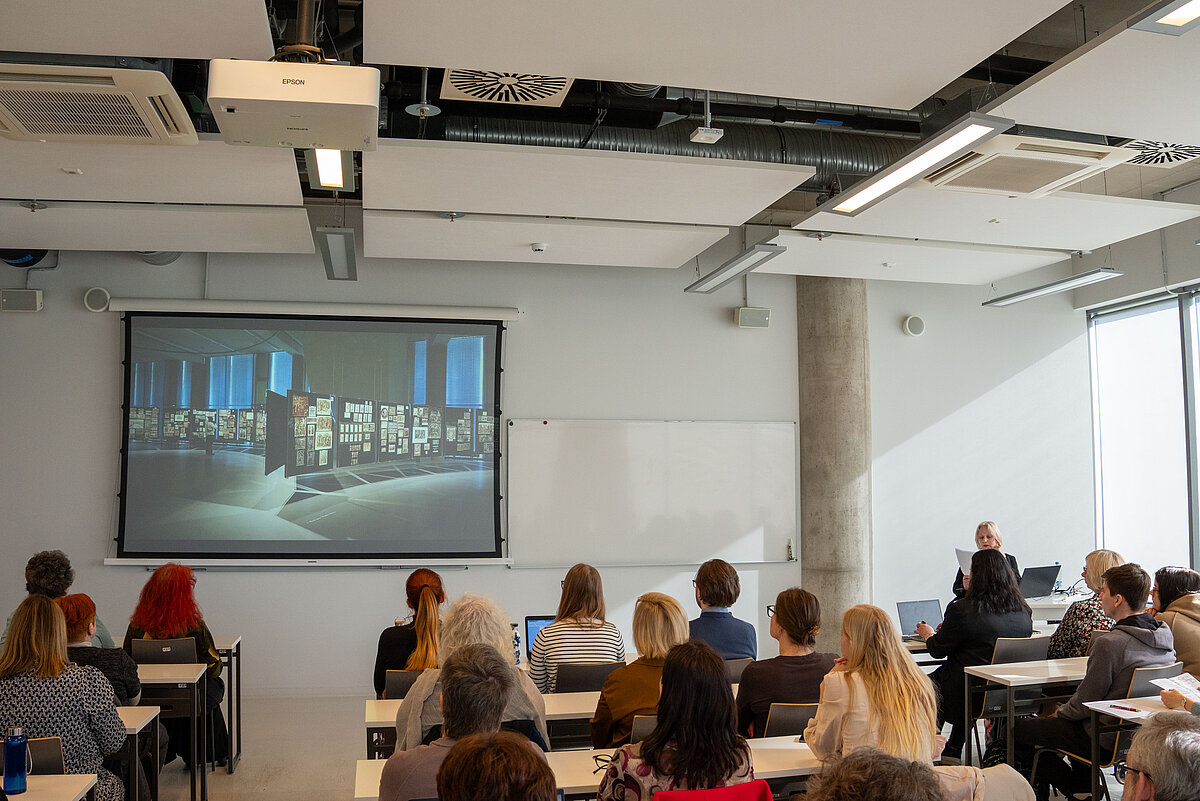
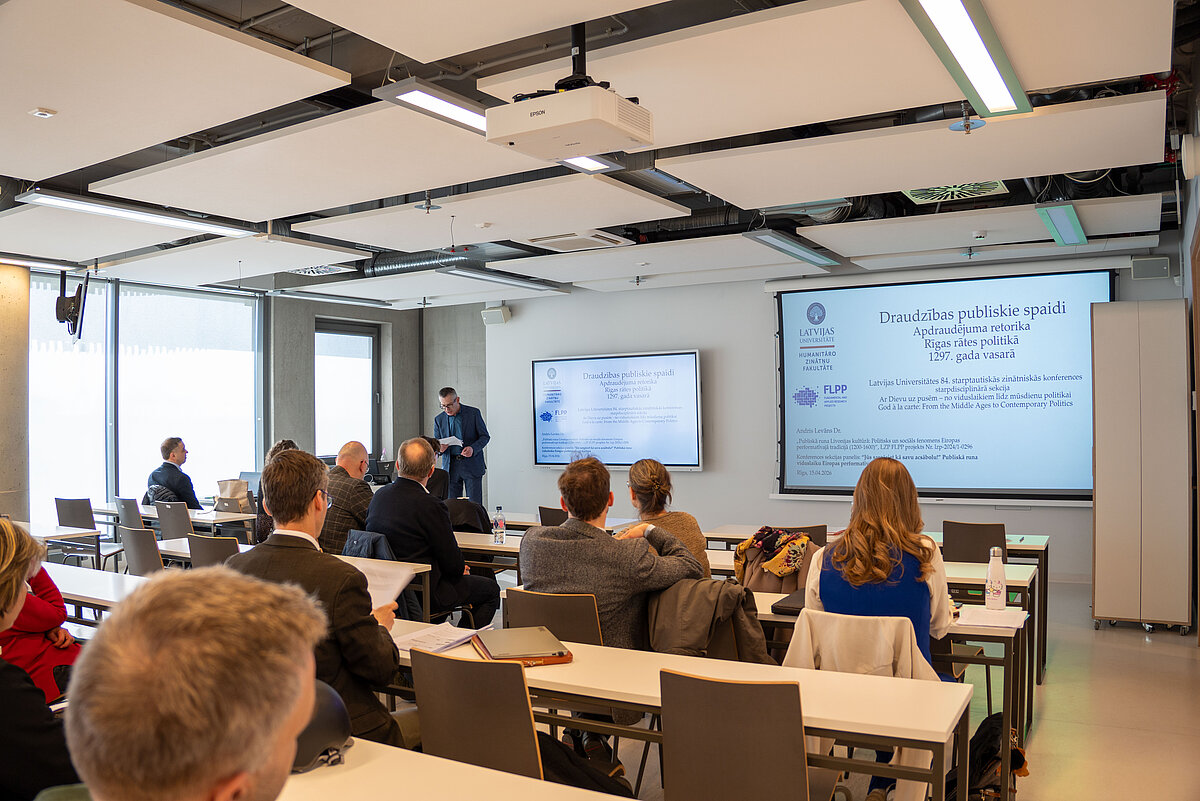

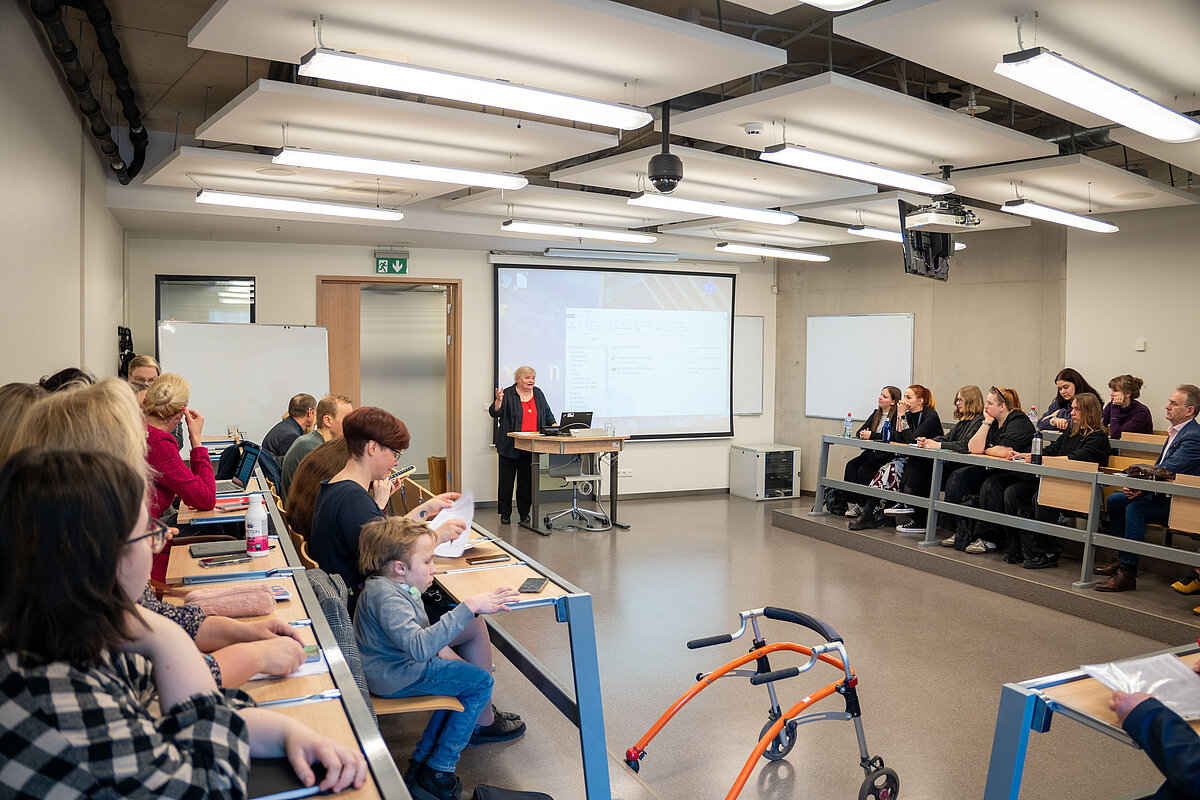
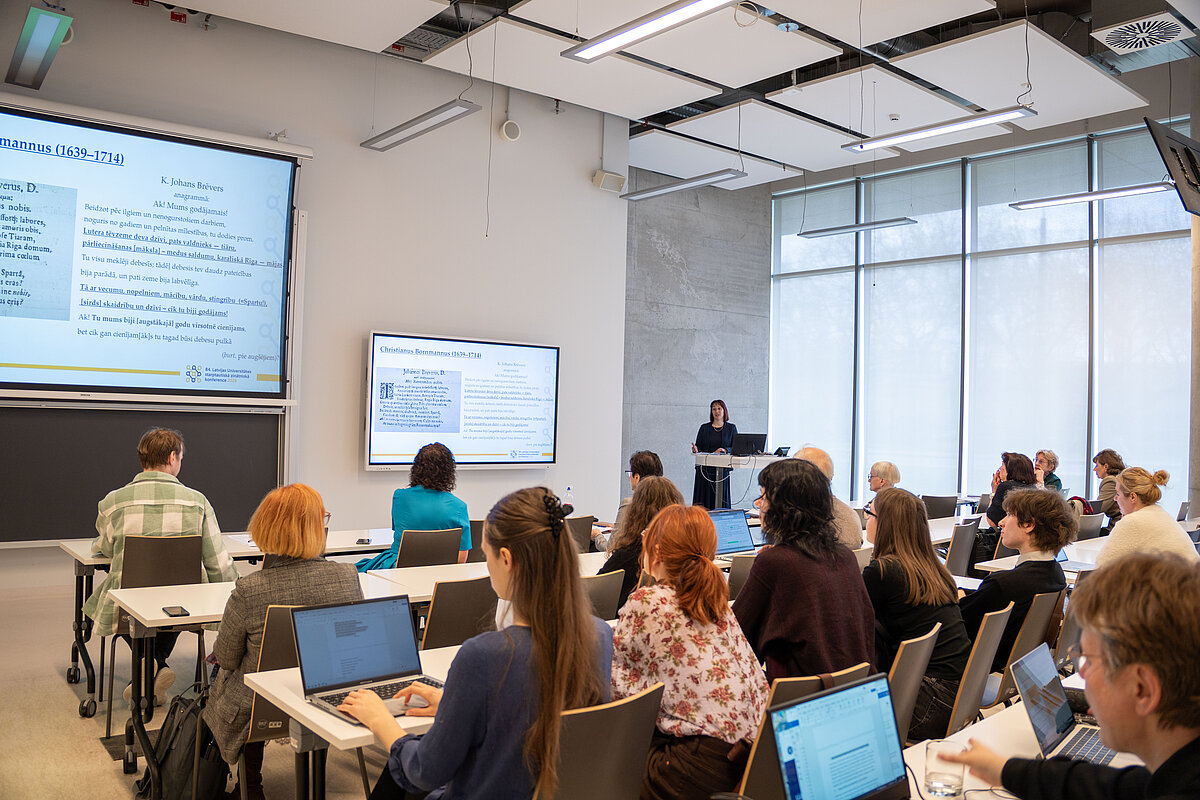
The motto of the Conference was “The University of the Future: Impact-Driven Leadership”, which highlighted the role of universities in knowledge creation, innovation, and societal development. Over the three-day Conference, nine thematic plenary sessions were held, dedicated to the UL priority research areas, and more than 600 scientific papers and over 180 poster presentations were presented across 52 thematic sections.
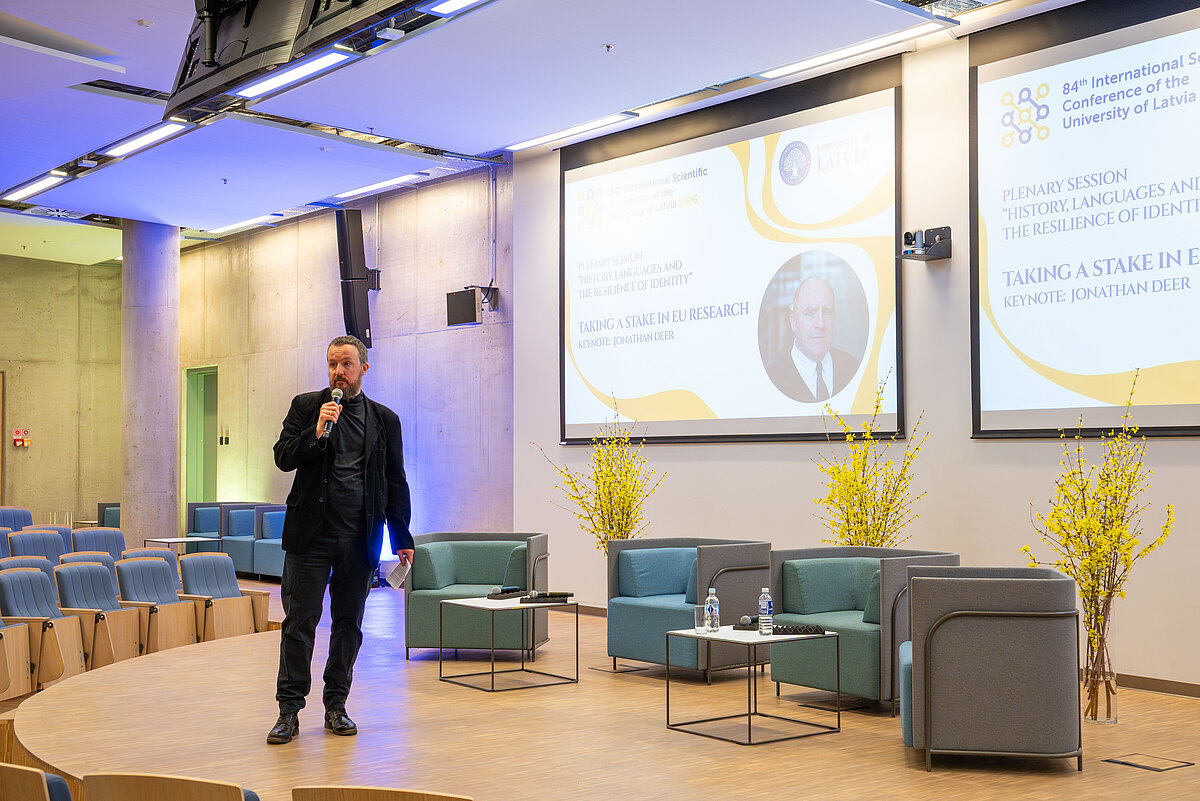
The Faculty of Humanities, in collaboration with the Faculty of Economics and Social Sciences and the Museum at the UL, coordinated a thematic plenary session “History, Languages and the Resilience of Identity”.
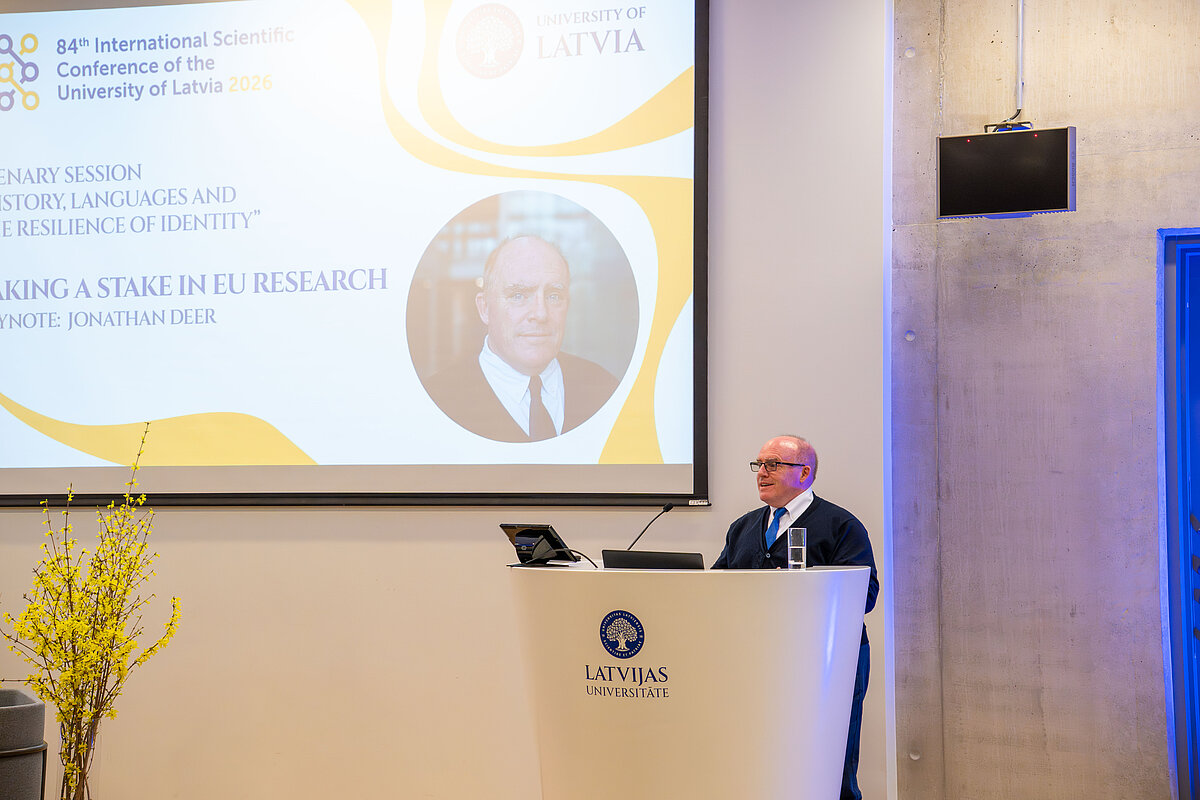
On 14 April, the thematic session “History, Languages and the Resilience of Identity” opened with a plenary session by Jonathan Deer, an internationally recognised expert in research policy and strategic planning. Jonathan Deer provided a broader situational analysis of trends in research funding and development in Europe and globally, whilst also focusing on solutions to enhance the visibility and sustainability of the humanities.
Deer is the Head of the Research and Innovation Committee at City St George’s, University of London and an internationally recognised expert in research policy and strategic planning. He is also a board member of the European Alliance for Social Sciences and Humanities (EASSH).
Throughout the day, two sections with broad international representation took place:
- Pagātnes krustpunkti: vara, identitāte un vēstures pētniecība | Crossroads of the Past: Power, Identity, and the Research of History
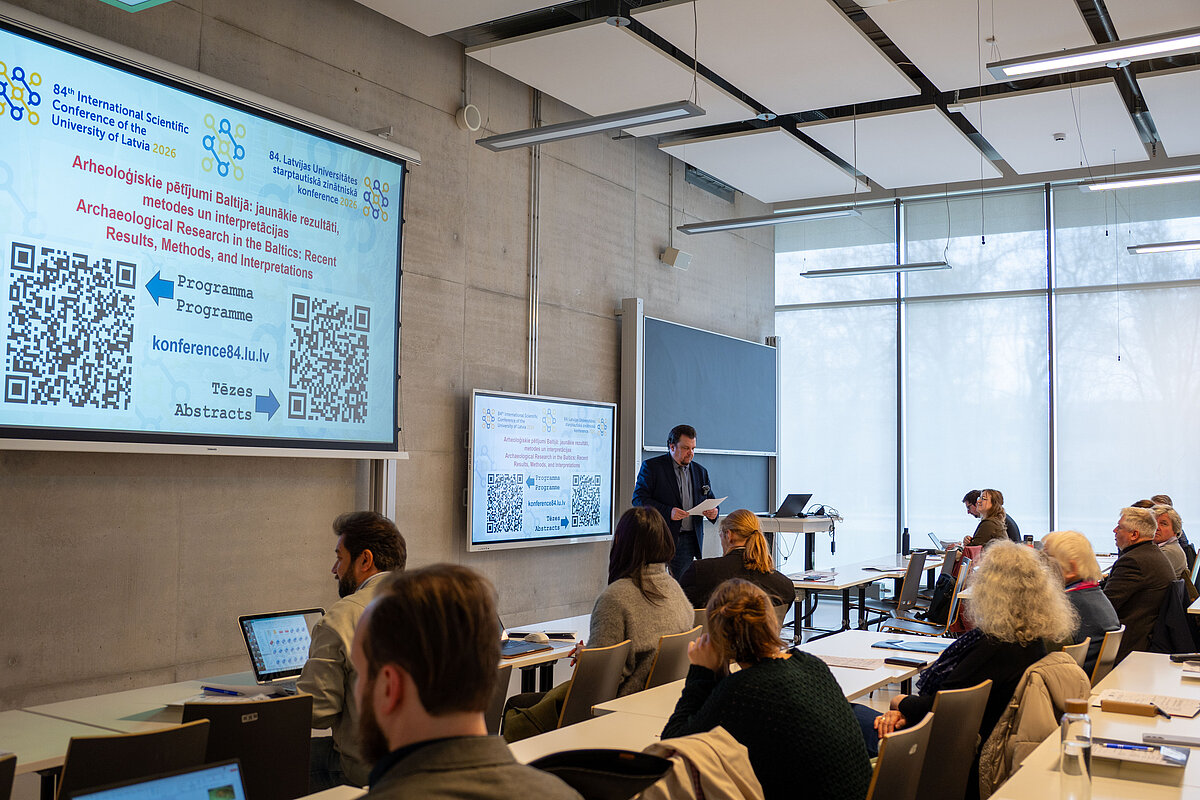
This section concentrated on the interrelationships between various social groups, which contribute to clashes of identity and often have consequences across the wider region. The thematic section was organised into several sub-sections, including the joint archaeology session, as well as history sessions dedicated to the milestone anniversaries of the eminent statistician Marģers Skujenieks and the Holocaust researcher Andrievs Ezergailis. As part of the session, the Museum invited attendees over the course of three days to explore seven posters – covering issues relating to history and identities, scientific heritage, nature and culture material collections, as well as unique artefacts and materials.
- Baltijas austrumpētnieku ieguldījums nozares attīstībā | The Contribution of Baltic Orientalists to the Development of the Field
The section highlighted the significant contribution of scholars from the Baltic region to the development of Oriental Studies as an academic discipline, linking the theoretical paradigms of the 18th–20th centuries with contemporary perspectives.
On 15 April, our researchers participated not only in the sections of the thematic plenary session “History, Languages and the Resilience of Identity”, but also in other sessions.
Thematic Plenary Session “History, Languages and the Resilience of Identity”.
- Ar Dievu uz pusēm: no viduslaikiem līdz mūsdienu politikai | God à la carte: From the Middle Ages to Contemporary Politics
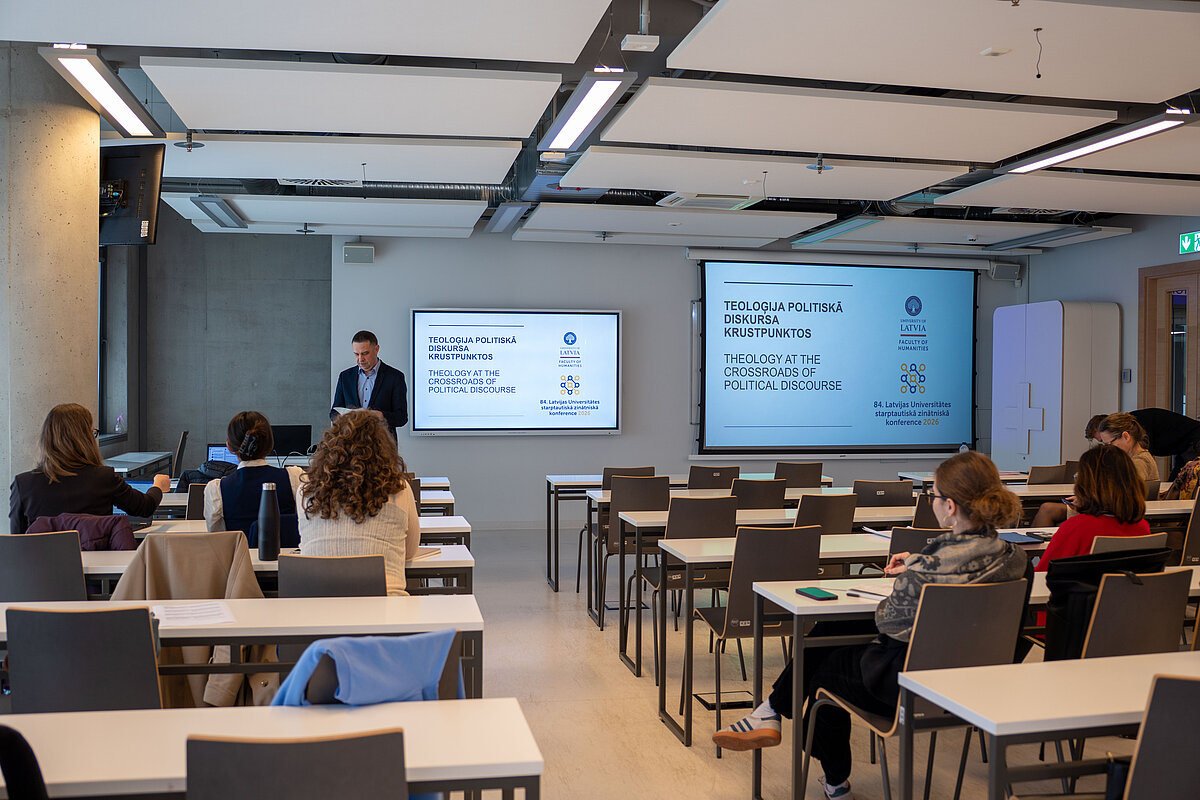
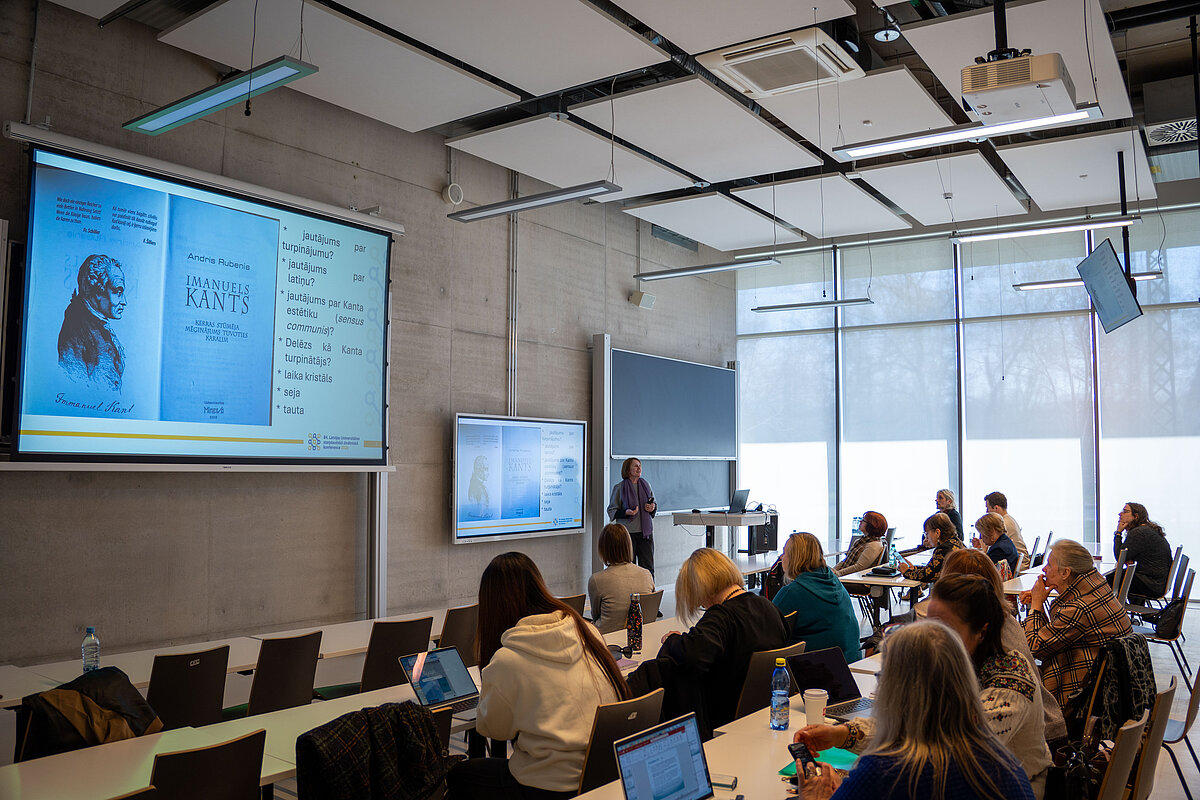
This section included the historians’ session “You Shall Guard Them as the Apple of Your Eye! Public Speech in the Performative Culture of Medieval Europe” and the theology and religious studies session “Theology at the Crossroads of Political Discourse”. The focus was on analysing the influence of public speech, theological concepts, and religious language in political discourse from the Middle Ages to the present day.
- Atmiņas institūcijas starp dabīgo un mākslīgo intelektu | Memory Institutions between Natural and Artificial Intelligence
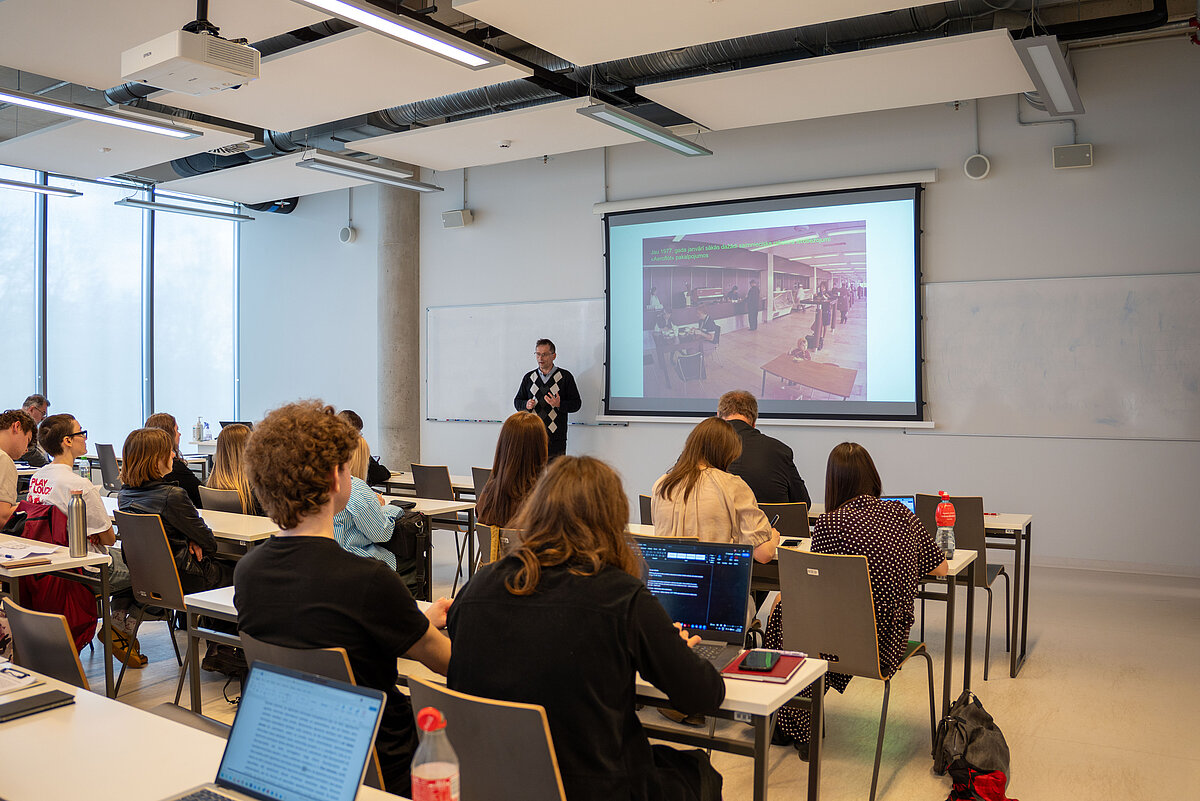
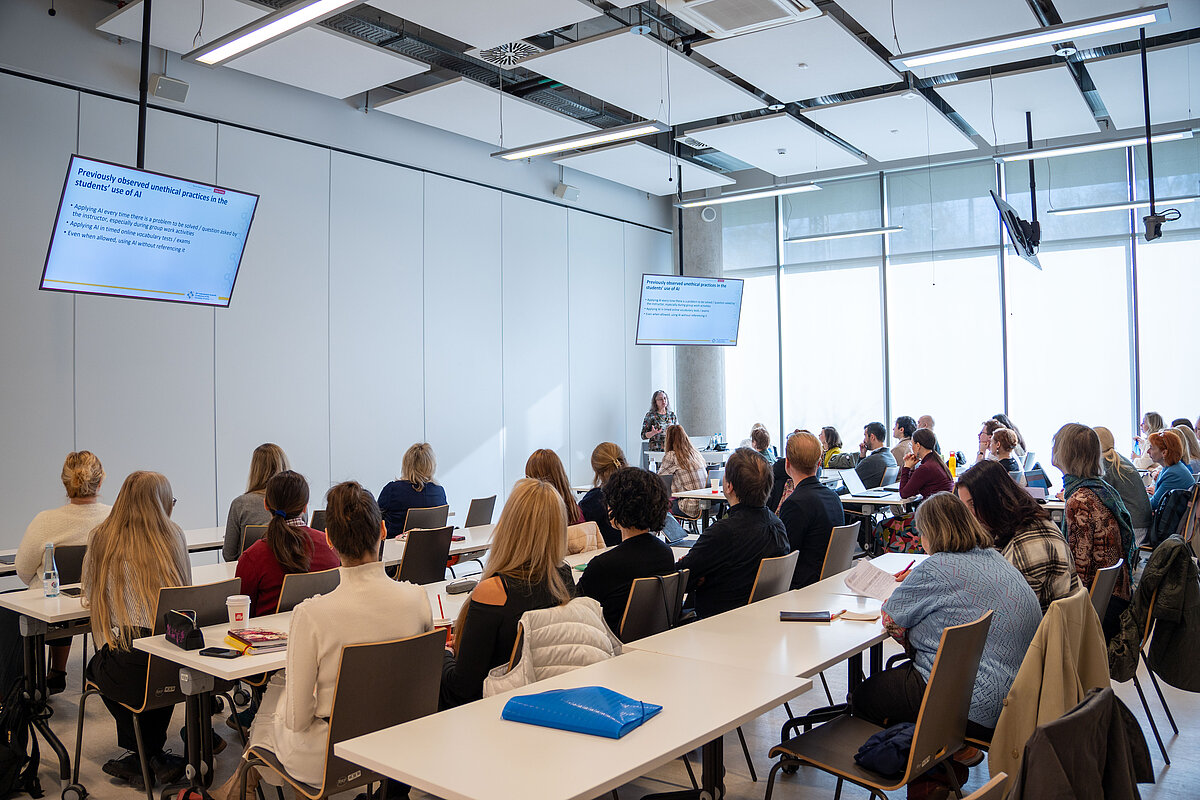
This highly attended section focused on topics such as the role of memory institutions within the information and social space, the contribution of the publishing industry and new challenges, changes in information practices, the impact of digital technologies on information services and organization of bibliographic data, occupational stress and burnout among librarians, as well as research and reading habits of students in the field, and other related issues. The Faculty of Economics and Social Sciences UL organised the section.
Thematic plenary session “Strengthening international and national security”
- Drošumspēja, migrācija un sabiedrības noturība: sociāli un filozofiski skatījumi | Security, Migration, and Societal Resilience: Social and Philosophical Perspectives
The section “Security, Migration and Resilience of Society: Social and Philosophical Perspectives” offered a multidimensional analysis of the challenges facing contemporary societies, focusing on the interrelationships among security, migration, and resilience. Rapid geopolitical changes, migration flows, social inequality, and cultural diversity raise questions about society’s capacity to maintain stability, solidarity, and democratic values amid crisis and uncertainty. Organised by the Institute of Philosophy and Sociology, FH UL.
Thematic plenary session “Environmental sustainability and climate change mitigation”
- Hidrosociālās pieejas ūdeņu pētniecībā un pārvaldībā | Daba un sabiedrība starpdisciplinārā perspektīvā
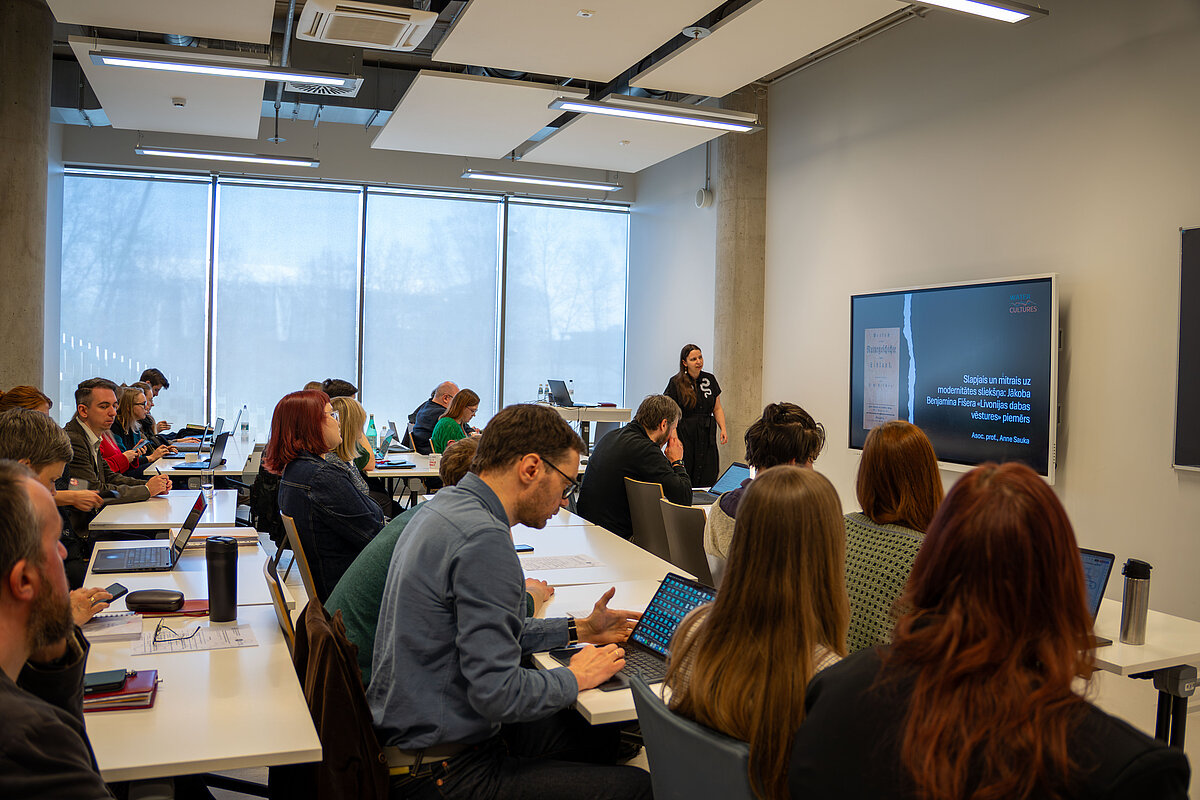
This section focused on water from social, cultural, political, historical and ecological perspectives, emphasising the importance of an interdisciplinary approach. The Faculty of Science and Technology UL organised it in collaboration with the Faculty of Humanities UL. The session was recognised as the most interdisciplinary session of the Conference.
On 16 April, visitors had the opportunity to discover the extent of linguistics and the diverse areas of research being carried out at the Faculty of Humanities UL and its partner institutions.
- Eiropa daudzveidībā: diskursi, valodas un kultūras | Europe in Diversity: Discourses, Languages and Cultures
This section focused on the analysis of Europe’s linguistic and cultural diversity, with an emphasis on discourses, languages, and their uses across social, educational, and cultural contexts. Emphasis was placed on linguistic analysis, discourse studies, data diversity (spoken, written, multimodal, digital data) and their processing in theoretical and applied linguistics, as well as on issues related to foreign language teaching and learning and literary traditions in Europe’s multilingual space. The section was recognised as the most international section at the Conference.
- Identitāte, modernais un tradicionālais Latvijā un diasporā | Identity, the Modern and the Traditional in Latvia and the Diaspora
The research focus of the section was the formation, development, and transformation of identity across the dimensions of language, literature, and collective memory, paying particular attention to the intersections of change and continuity in textual poetics and language use, considering the cultural process’s efforts to sustain Latvian national culture and ethnolinguistic capital, as well as to address the impact of international migration on perceptions of identity.
Our thanks go to all participants, speakers and section organisers for their hard work, the quality of the academic discussions and their active participation. Your involvement and cooperation significantly enriched the Conference and fostered an interdisciplinary exchange of ideas.
