
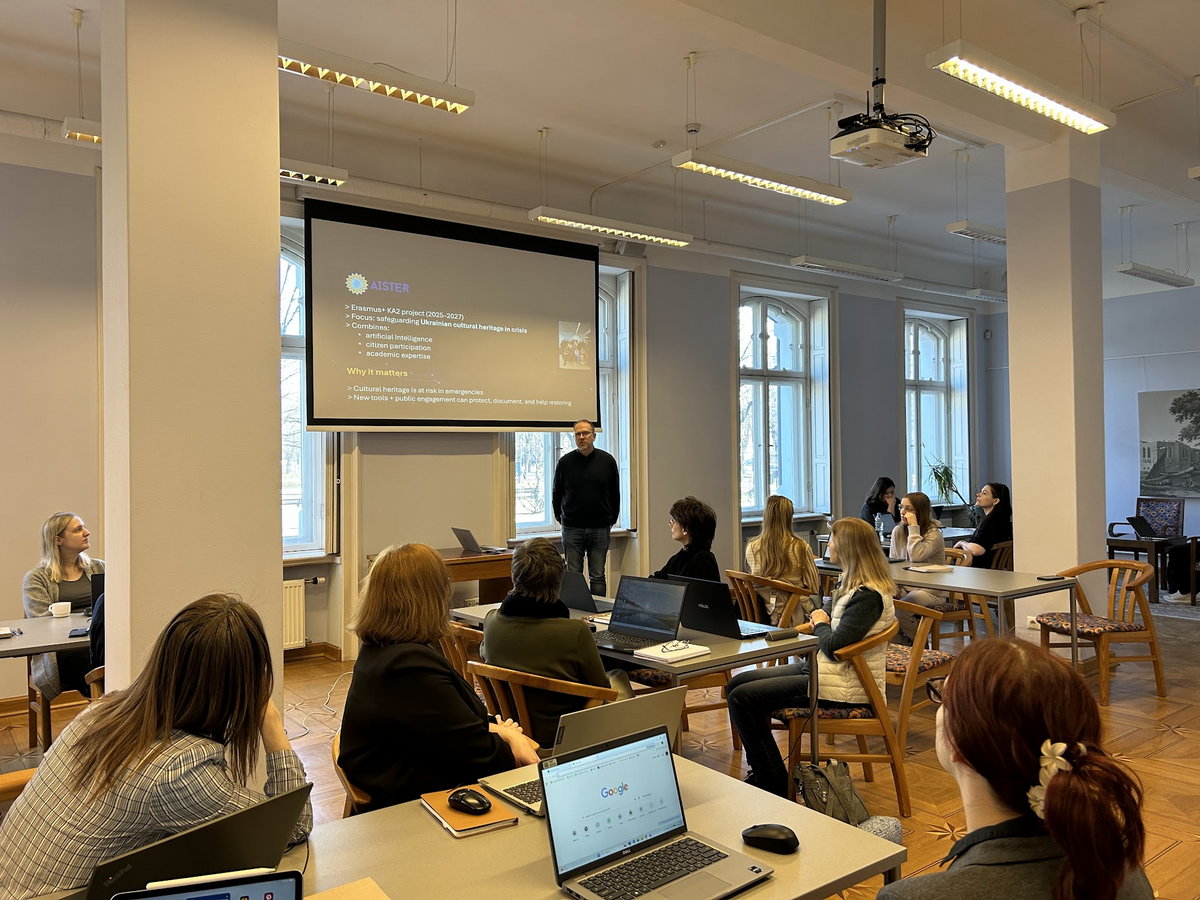
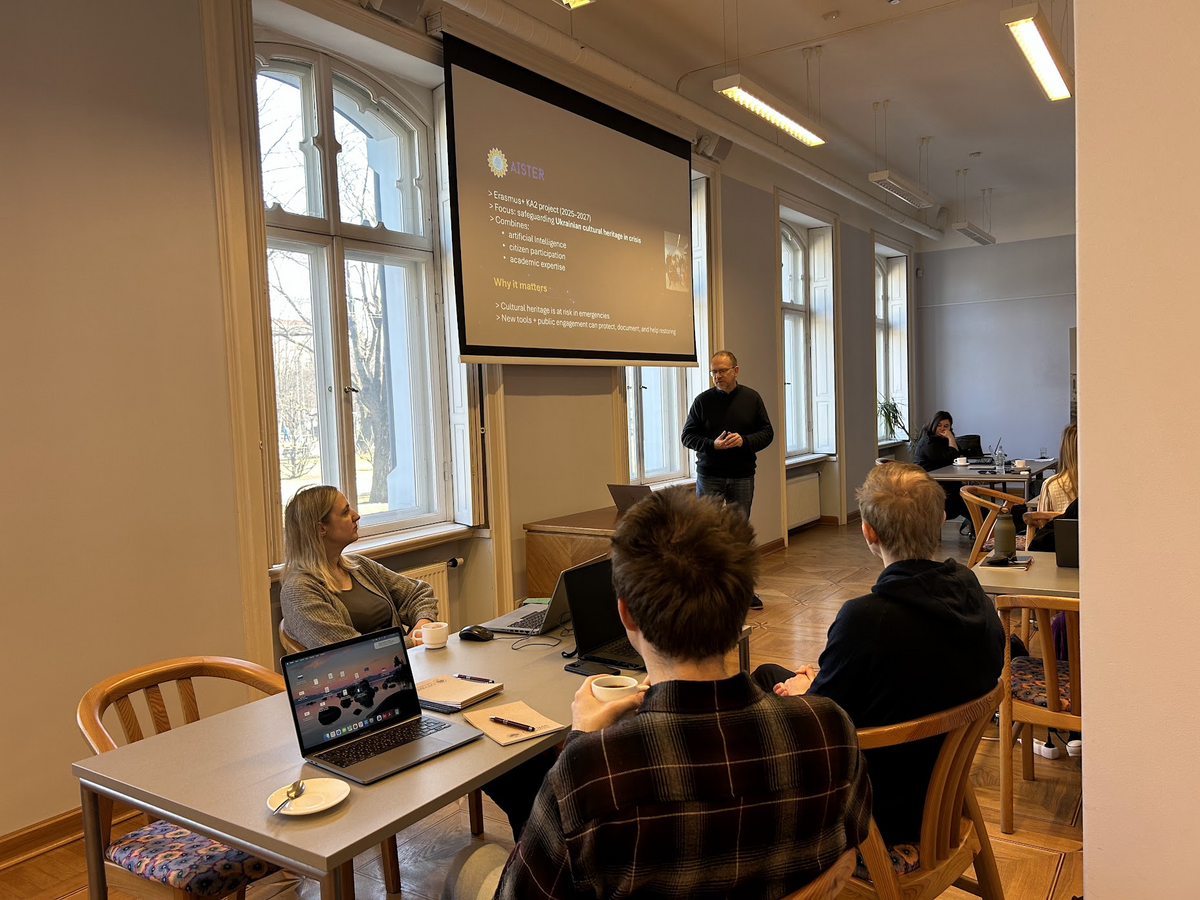
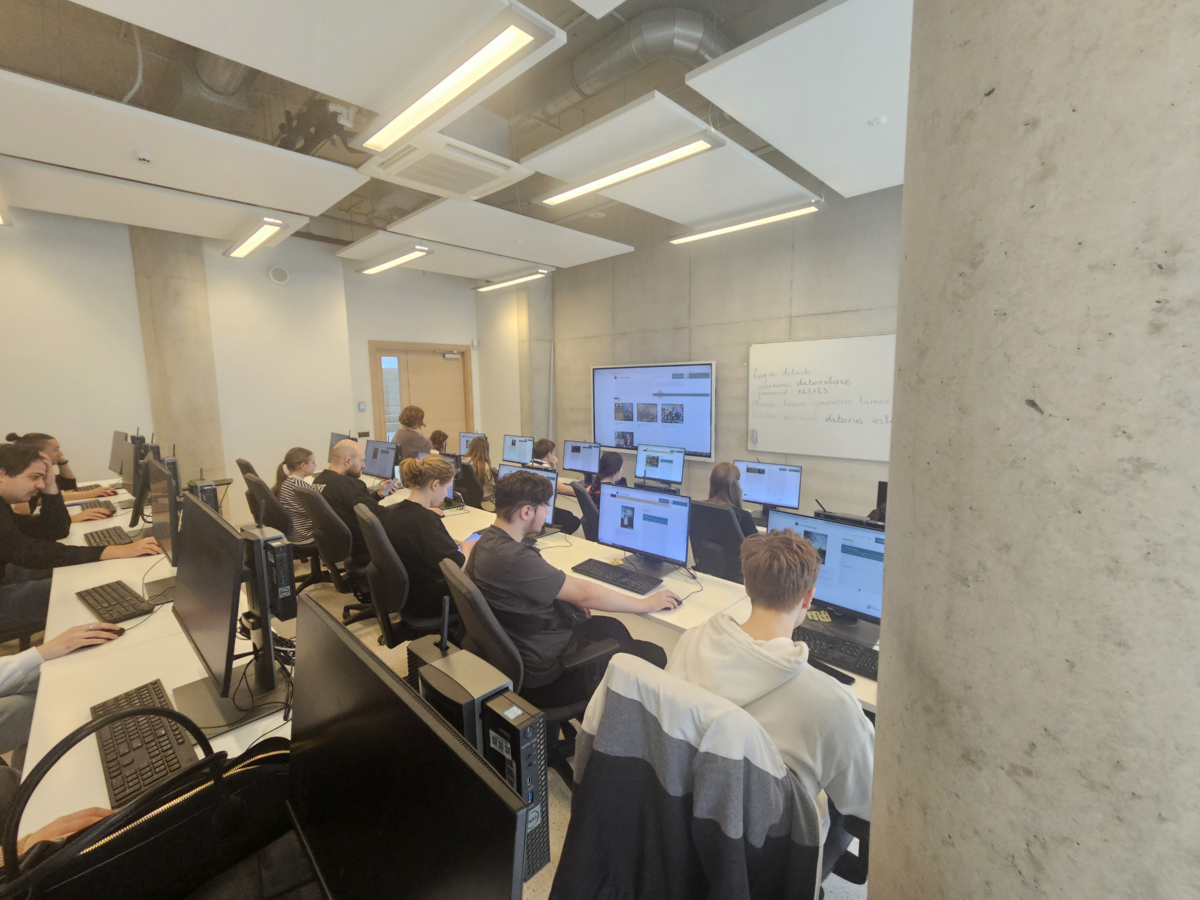
Participants included youth from the Ukrainian community and their friends from Young Folks LV, members of academia, and other interested individuals. Together, they helped to improve an Artificial Intelligence (AI) prototype's ability to recognize elements within images of Ukrainian ethnographic artifacts
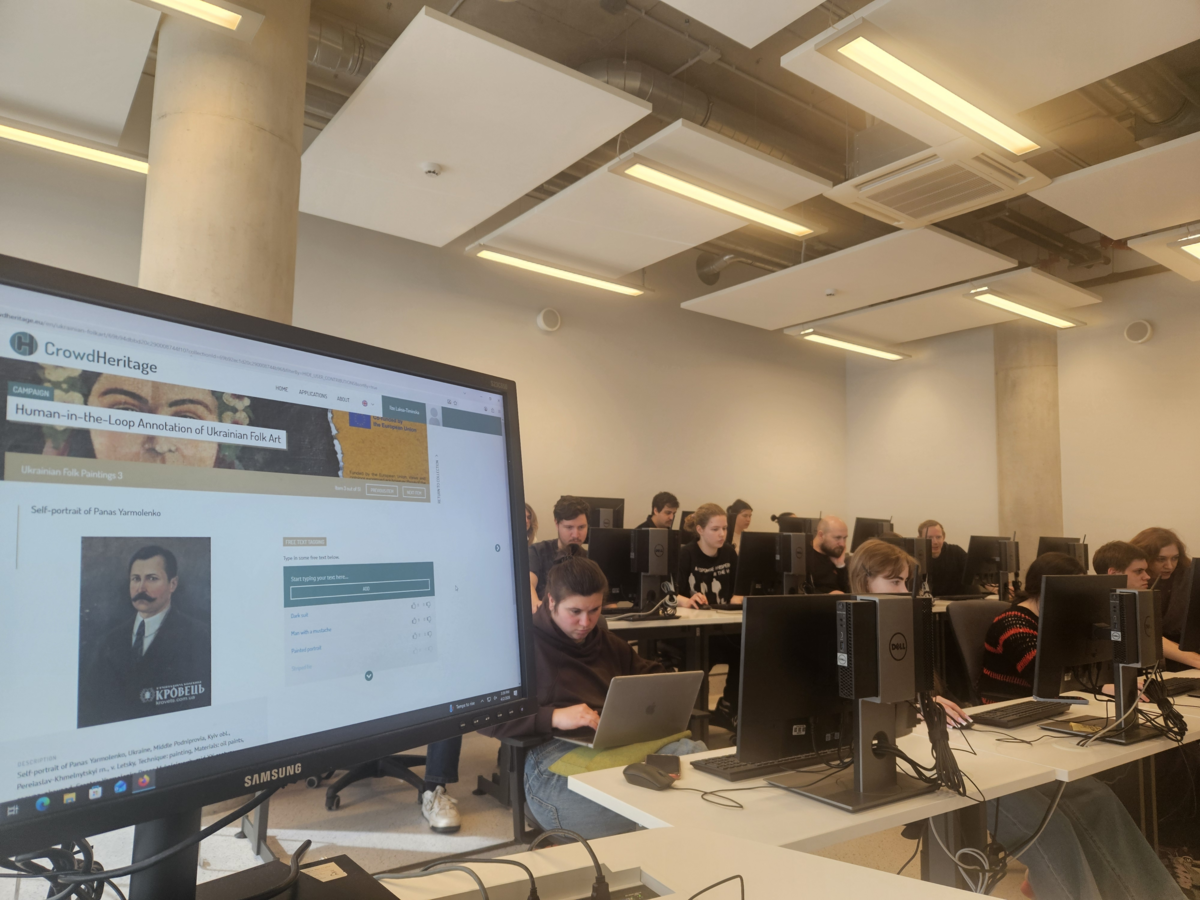
The work took place on Europeana CrowdHeritage, a platform created for crowdsourcing campaigns using metadata from European cultural heritage institutions, utilizing a prototype developed by the AISTER project partner, Web2Learn.
The task for the workshop participants was to review the ethnographic collection of the online-museum of the traditional art of Ukraine "Krovets", evaluate the relevance of the keywords automatically generated by the digital tool's prototype to the images, and, if necessary, supplement them with their own descriptive variations. During the in-person workshops organized by DHC and LUB and separate remote sessions hosted by Web2Learn, nearly 55,000 annotations were prepared in this manner, which will help to improve the accessibility of digital cultural heritage artifacts.
AISTER is an international Erasmus+ KA2 program project involving partners from the University of Luxembourg, the University of Latvia (HZF DHC and LUB), Taras Shevchenko National University of Kyiv (Ukraine), Web2Learn (Greece), and Europeana (the Netherlands). Its main goal is to explore the potential of AI-driven approaches and citizen science in the protection and safeguarding of cultural heritage during crisis situations, with a special focus on Ukraine.
The DHC expresses its gratitude to the specialists at LUB for their support in organizing these activities.
 of the Faculty of Humanities (HZF) and the Library of the University of Latvia (LUB) organized two Ukrainian cultural heritage data workshops as citizen science activities within the framework of the AISTER project. )