
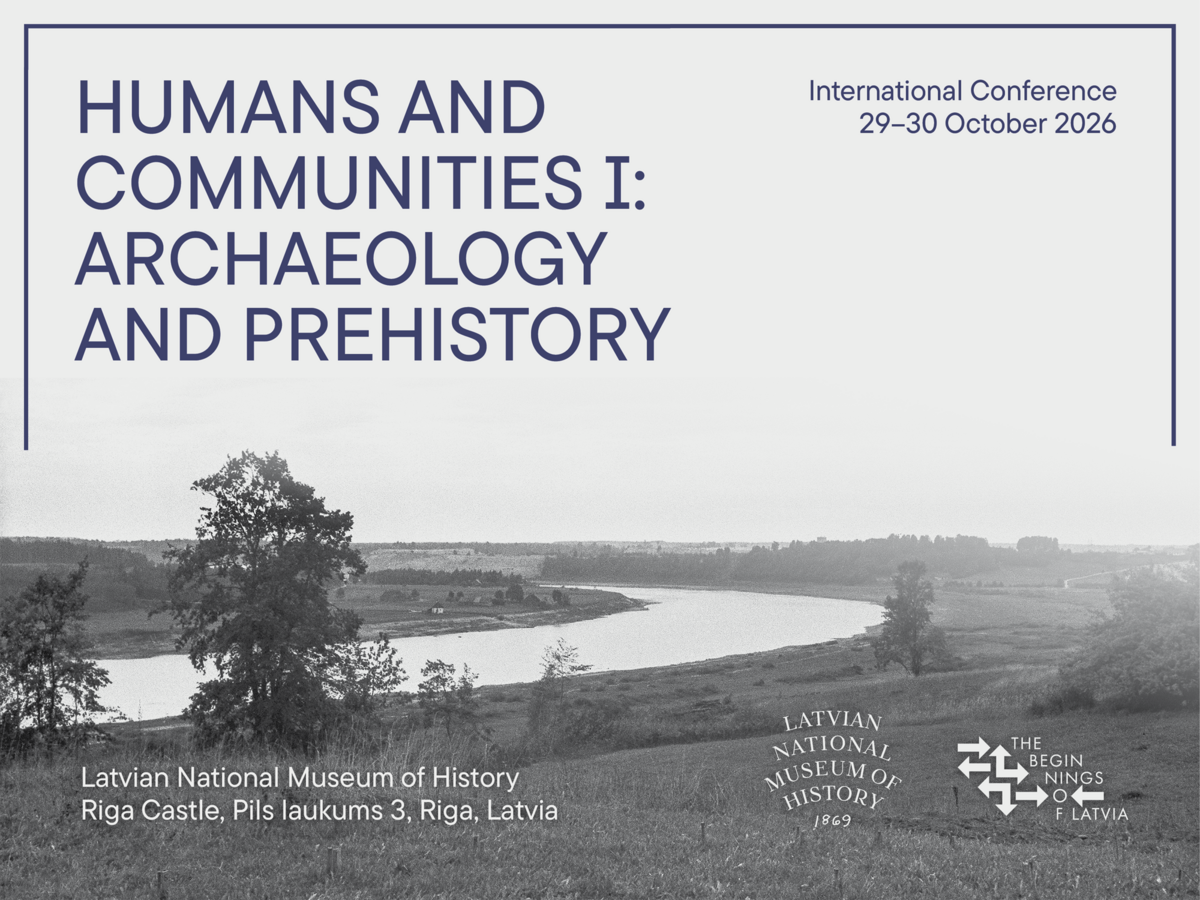
The conference will bring together 25 researchers from eight European countries to explore how human communities emerged and changed over time, and how interaction, migration, language and culture have shaped the history of the Baltic region.
The programme includes seven scientific sessions bringing together insights from archaeology, history, linguistics, genetics and other disciplines.
Researchers from the UL Faculty of Humanities will also contribute to the conference through presentations, chairing sessions and moderating discussions: Leading Researcher Valts Ernštreits, Associate Professor Andris Šnē, Researcher Vanda Haferberga, Leading Researcher Valdis Bērziņš and Researcher Aija Macāne.
The conference programme also features keynote lectures by three internationally recognised researchers. Dr Volker Hilberg (Germany) will explore Scandinavian influence on eastern Baltic societies during the Late Iron Age, Professor Tivadar Vida (Hungary) will present the latest archaeogenetic findings on community formation, while Professor Valter Lang (Estonia) will examine the ethnolinguistic history of the eastern Baltic region.
The first day of the conference will conclude with a discussion entitled “The Future of the Past: New Questions, New Methods, New Communities”, focusing on how the latest research methods and interdisciplinary approaches can contribute to our understanding of the past.
The working language of the conference is English. Participation is free of charge, but advance registration is required by 26 October via email at info@lnvm.gov.lv.
Conference programme (English)
Further information is available on the Latvian National Museum of History website.
 Interdisciplinary Research Incubator “The Beginnings of Latvia”, coordinated by the UL Faculty of Humanities' Livonian Institute (headed by Valts Ernštreits).)