
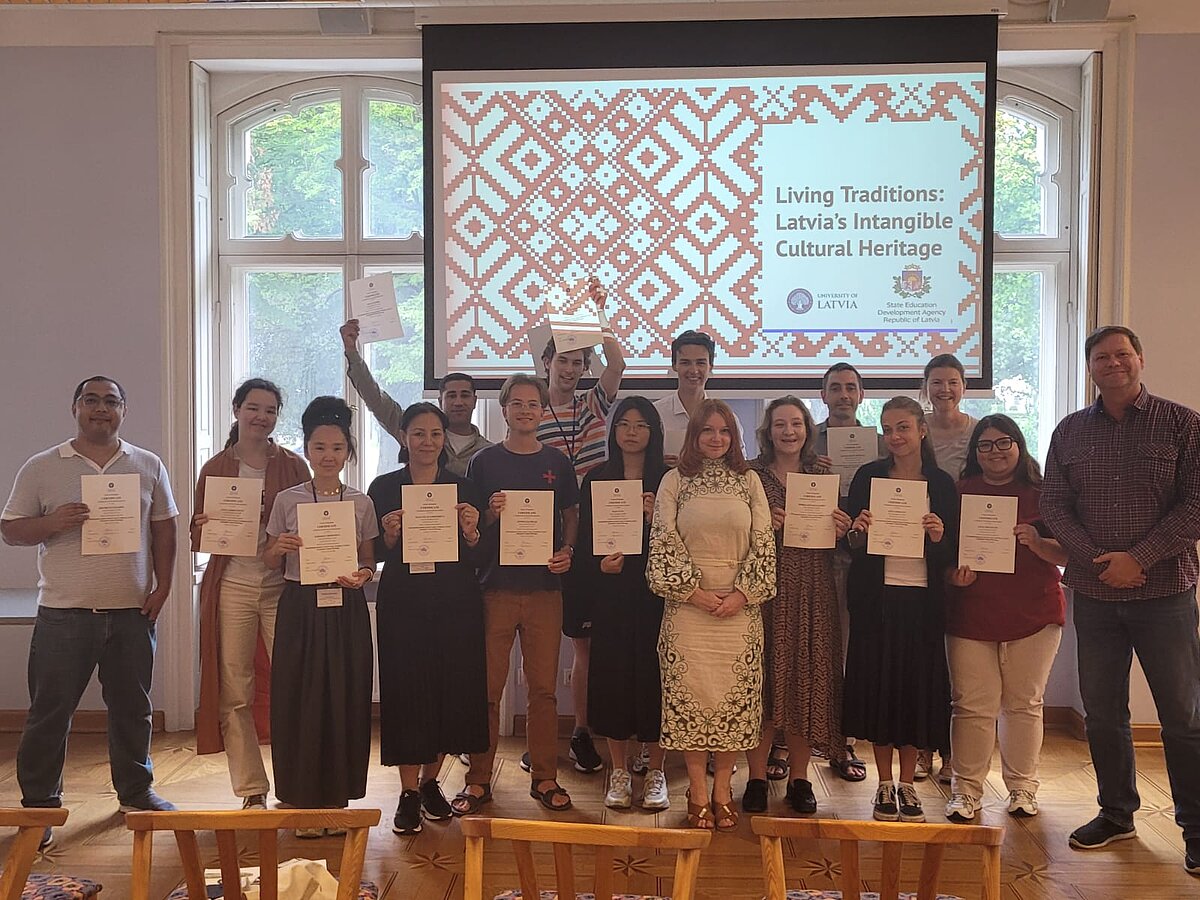
At the opening of the summer school, the participants were addressed by Prof. Dace Balode, Dean of the Faculty of Humanities at the University of Latvia, and Agnese Šķēle, Chief Expert at the State Education Development Agency, who emphasized the importance of exploring Latvia’s intangible cultural heritage and the role of international academic cooperation in preserving and promoting cultural heritage.
Over the course of ten intensive days, participants explored the diversity of Latvia’s cultural heritage through lectures, hands-on workshops, and guided tours.
During the first few days of the program, participants learned about the history of the University of Latvia, Latvia’s culinary heritage, and the cultural and historical heritage of the resort city of Jūrmala, gaining their first glimpse into the diversity and traditions of Latvian culture.
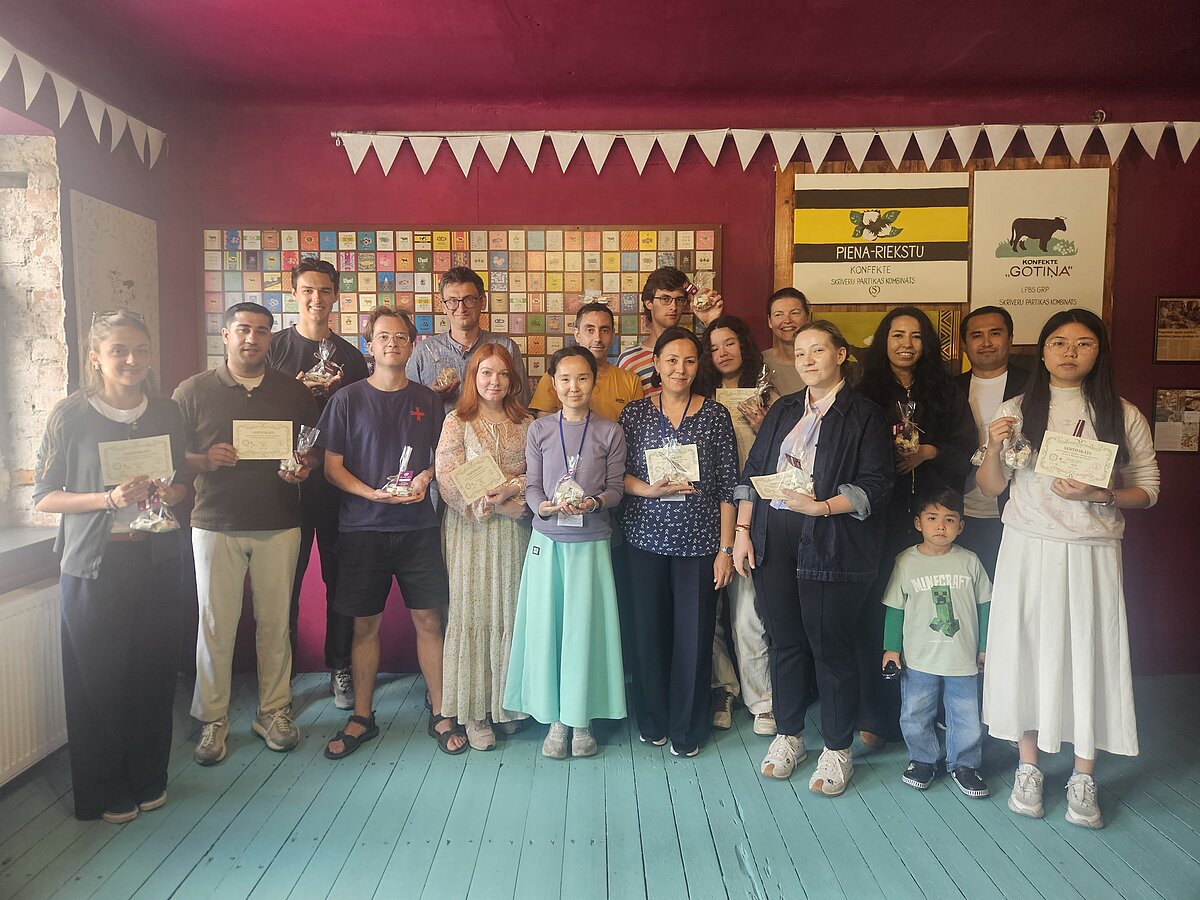
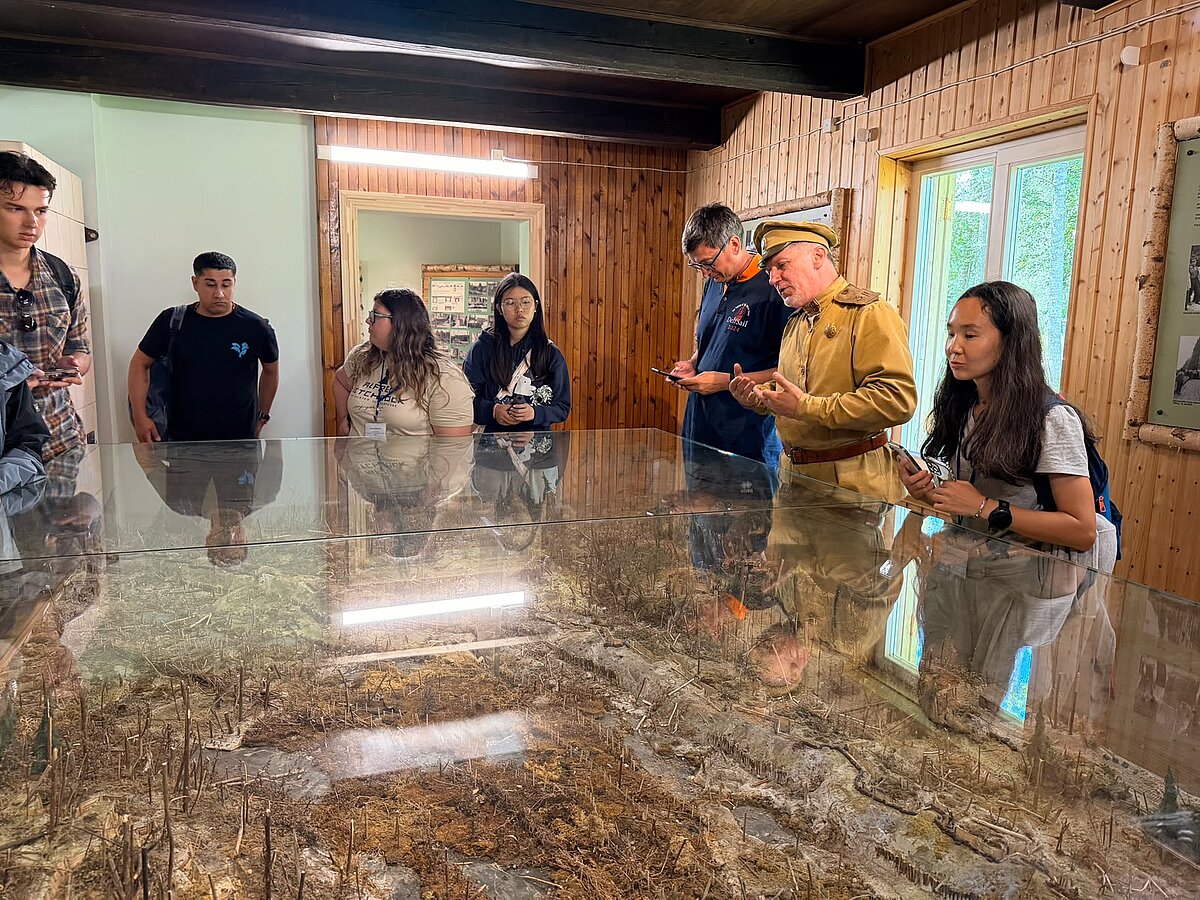
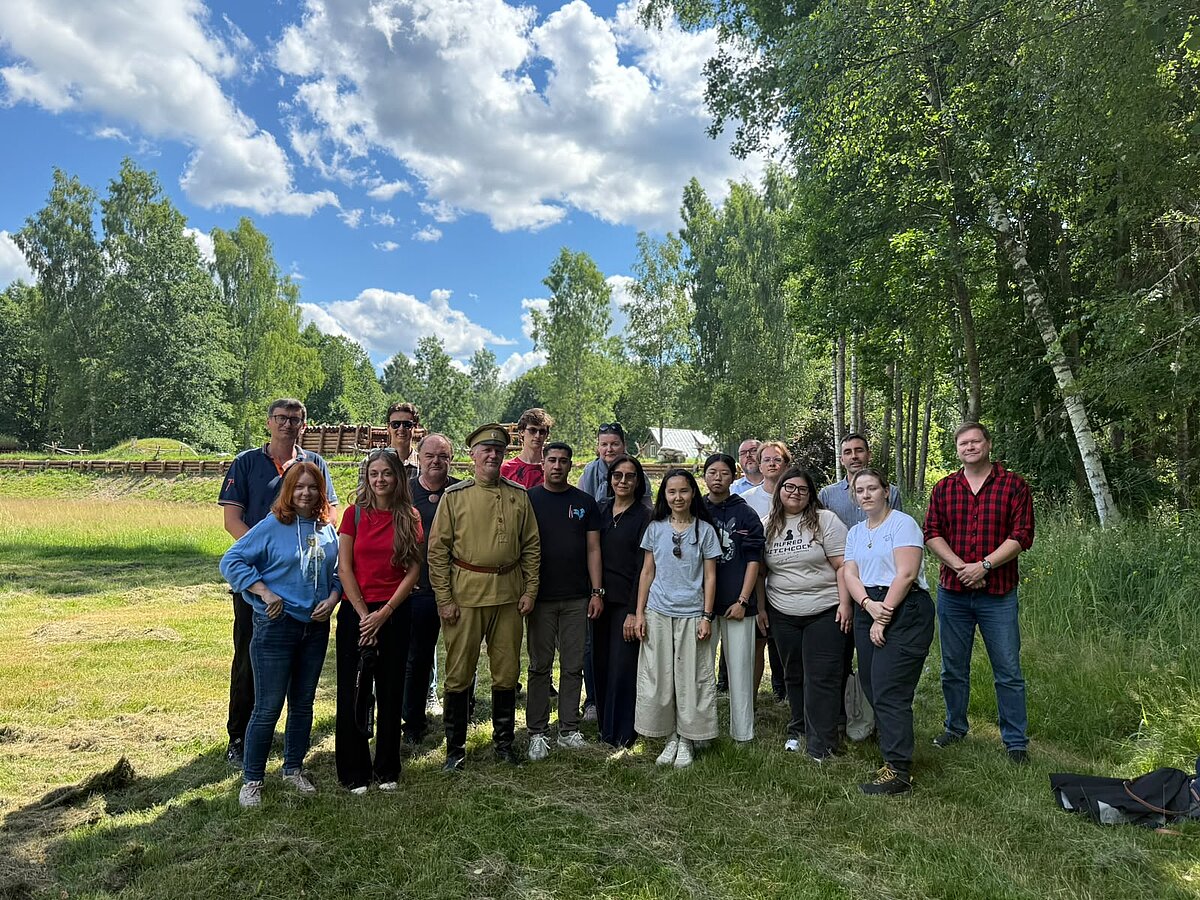
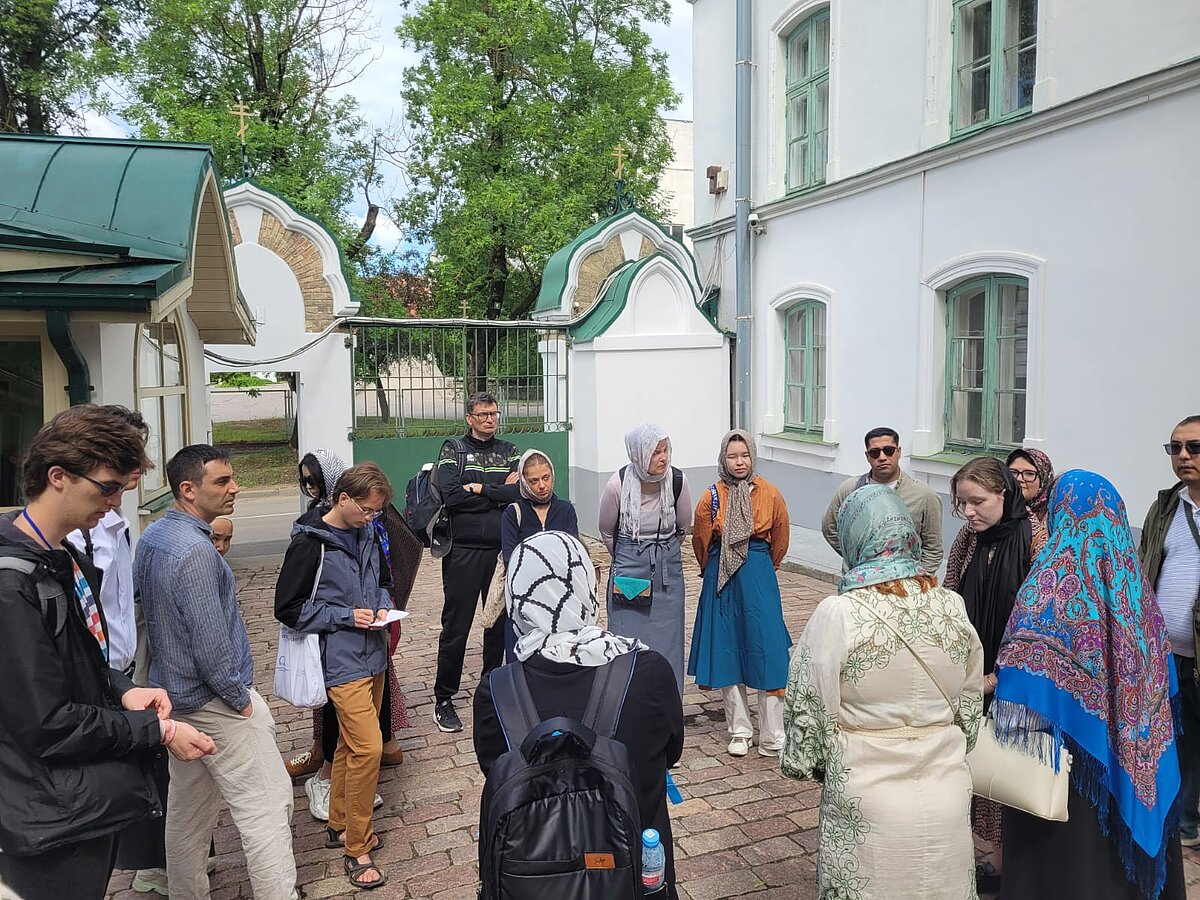
During the summer school, participants visited the State Historical Archives of Latvia ot the National Archives of Latvia, where they learned about Latvia’s documentary heritage and the principles of preserving and using historical sources. At the Christmas Battles Museum, they learned about the daily lives of Latvian riflemen during World War I and tested their skills on a military obstacle course. The participants also visited Skrīveri, where they learned about the history of the legendary “Skrīveru Gotiņa” candy and its traditional production process, discovering one of the most recognizable symbols of Latvia’s culinary heritage. During a visit to the Riga Grebenshchikov Old Believers' House of Prayer in Riga, participants learned about the history of the Old Believers in Latvia, their religious traditions, and the significance of this community to Latvia’s cultural diversity.
The lecture program focused in particular on the symbolism of Latvian ornamentation, traditional culture, religious traditions, linguistic diversity, and the linguistic characteristics of Latvia, allowing participants to gain a multifaceted understanding of Latvia’s intangible cultural heritage.
The summer school took place from June 28 to July 7, 2026, in Riga, Daugavpils, and Subate; The event was organized by the Institute of Latvian History of the Faculty of Humanities at the University of Latvia, in collaboration with Daugavpils University, the association “Partnerība ‘Kaimiņi’” and the community cooperation network “Sēlijas salas.”
, hosted the international summer school “Living Traditions: Latvia’s Intangible Cultural Heritage,” which was attended by 30 participants from 13 countries — Latvia, Lithuania, Poland, Spain, the Czech Republic, Hungary, Turkey, Moldova, Ukraine, Georgia, Kazakhstan, Uzbekistan, and China.)