
 CONFERENCE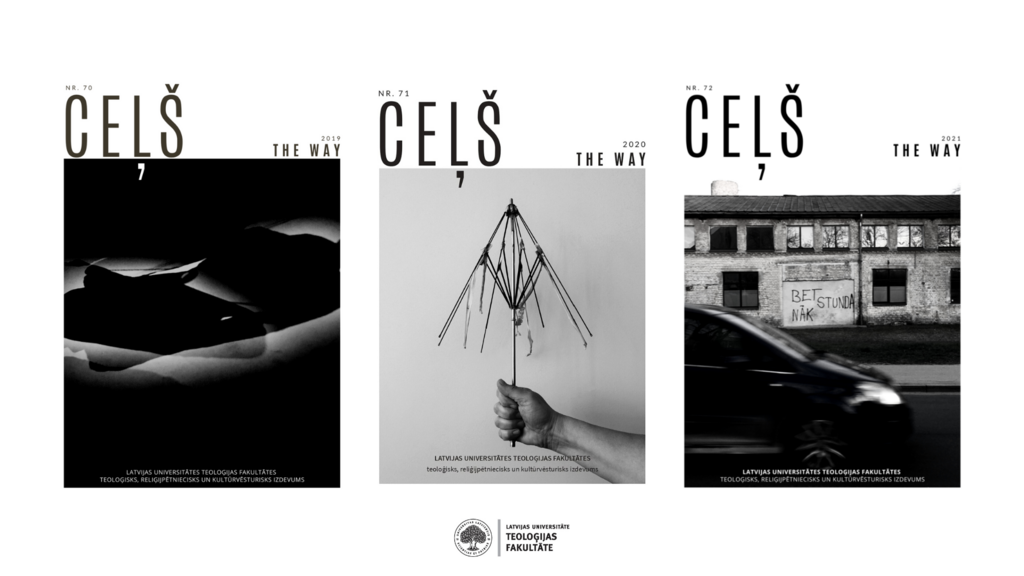
Journal of theological, religious and cultural studies "Cels"
Journal "Cels" is published once a year with papers in both Latvian and English. It is a peer-reviewed interdisciplinary journal of the University of Latvia. The journal is continuously published to deepen the readers' knowledge about theology and religious studies and their hitorical and present processes. "Ceļš" (The Way) explores the problematics of theology and religious studies in a global context, especially focusing on the analysis of religious life in Latvia and the Baltics. The journal was first published in 1935 and renewed in 1988.
The journal is not connected to any particular religious belief. It aims to critically analyze processes including diverse theological and religious studies fields - comparative religion, church history, sociology of religion, philosophy of religion, textual critics, biblical theology, and others. The journal's target audience is experts and students within the humanities and social studies field and everybody else interested in the scientific analysis of religious phenomena.
It is possible to buy the journal in the University of Latvia Press (Aspazijas blvd. 5) or major bookstores in Latvia. The journal is also fully available in electronic format: https://doi.org/10.22364/cl. Previous journal numbers: No. 72, No. 71, No. 70, No. 69, Cels archive (e-resource repository of University of Latvia).
EDITORS' RESPONSIBILITY
- The editors of the journal "Ceļš" (The Way) have the right to reject any paper that creates a suspicion of plagiarism or demonstrates an attitude that is contrary to the Academic Ethics Codex of the University of Latvia.
- The editors inform the author about any possible conflicts of interest.
- The editors evaluate only the scientific quality, novelty, and the paper's adequacy following the theme of the particular edition of the journal (if it has any).
- The editor-in-chief is responsible for sending the paper to be evaluated by two anonymous experts who, within the given timeframe, send editor-in-chief qualified evaluation about the possible publication, its rejections, or the necessary improvements.
- The editors take full responsibility for the publishing of the paper and confirm that personal interests have not influenced the decision.
- The editors provide editing of the paper. In cases of misunderstanding, the modifications are coordinated with the author of the paper.
- Publishers and editors take reasonable steps to identify and prevent the publication of papers where research misconduct has occurred.
- In no case shall a publisher or editors encourage such misconduct or knowingly allow such misconduct to take place.
- In the event that a journal’s publisher or editors are made aware of any allegation of research misconduct relating to a published article in their journal, including but not limited to plagiarism, citation manipulation, and data falsification, among others, the publisher or editor shall follow COPE’s guidelines (or equivalent) in dealing with allegations.
- Publishers and editors will publish corrections, clarifications, retractions, and apologies when needed. Any necessary changes will be accompanied by a post-publication notice in the printed and e-version of "Ceļš" (The Way).
REVIEWER'S RESPONSIBLITIES
- Any conflict of interest cannot influence the reviewer's evaluation. They will evaluate only the scientific quality, novelty, and adequacy following the theme of the particular edition of the journal (if it has any).
- The reviewer cannot distribute written or oral information about the paper's manuscript or its confidentiality.
- If the reviewer has verifiable information that would be a valid reason to reject the paper, they must immediately inform the editor-in-chief.
- Suppose the reviewer is aware of valid reasons that won't allow them to evaluate the paper. In that case, they must immediately notify the editor-in-chief so that another reviewer can evaluate the paper.
BOARD OF EDITORS
Editor-in-chief: Dr. phil. professor Valdis Tēraudkalns, University of Latvia
- Dr. phil. professor Normunds Titāns, University of Latvia
- Dr. theol. professor Dace Balode, University of Latvia
- Dr. art. professor Deniss Hanovs, The Art Academy of Latvia
- Dr. theol. professor Ralfs Kokins, University of Latvia
- Dr. theol. docent Elizabete Taivāne, University of Latvia
- Dr. theol. professor Riho Altnurme, Tartu University, Estonia
- Ph.D. associated professor Juris Dreifelds, Brock University, Canada
- Ph.D. Martin Percy, Harris Manchester College, University of Oxford, United Kingdom
- Dr. professor Stefan Schreiner, University of Tübingen, Germany
- Ph.D. James Woodward, Sarum College, United Kingdom
- Dr. theol. habil., Dr. rer. soc. professor Hans-Georg Ziebertz, University of Wüerzburg, Germany
Guidelines for authors
- There are no fees or charges required for manuscript processing and publishing materials.
- Anyone can submit an only previously unpublished papers that they haven't handed in for evaluation in other scientific journals. Submitting the same manuscript to produce more than one publication constitutes unethical publishing behaviour and is unacceptable. However, if the author and editors agree to secondary publication, then the secondary publication must include a reference to the first publication.
- Authors may deposit their author accepted manuscript at any point, but it must not be made publicly accessible until official publication (i.e. as soon as it appears in its final typeset version). Authors are allowed deposits to their institutional repository (the repository of the institution they are affiliated to) and not-for-profit subject repositories.
- The author can submit the paper in Latvian with a summary in English or English with a summary in Latvian.
- The paper limit is from 20 000 to 40 000 characters (with spaces).
- It is possible to add up to 5 illustrations to the paper.
- After the submission, two anonymous experts (who are not part of the editorial board) will evaluate the scientific quality, novelty, and the paper's adequacy following the theme of the particular edition of the journal (if there is one).
- The author then receives from editors the suggested changes which they work in the text in the indicated timeframe if they consider them reasonable.
Send the final paper version and any additional questions to valdis.teraudkalns@lu.lv or call +371 67034433 (editorial office, Raiņa blvd. 19, Riga, Latvia).
Formatting requirements
- At the beginning of the paper there should be included: the title of the paper, information about the author or authors (name and surname, scientific degree, academic institution).
- Formatting requirements for the text: MS Word, font - Times New Roman, size of the letters - 12 pt, space between lines - 1,5. Titles - 12 pt, CAPS LOCK, subtitles - 12 pt, bold.
- The author has to hand in the summary of the paper in English if it is in Latvian and in Latvian if the paper is in English (5000 - 6000 characters with spaces).
- The author has to submit the illustrative material in a separate file in jpg or png format. If the paper contains any illustrative material, the author must confirm that no copyrights have been breached.
- The author must also send information about the illustrative material's author and title. In the paper, the author has to put a note about where the illustrative material should be.
- References have to be formatted as footnotes.
Editors' responsibilities
- The editors of the journal "Ceļš" (The Way) have the right to reject any paper that creates a suspicion of plagiarism or demonstrates an attitude that is contrary to the Academic Ethics Codex of the University of Latvia.
- The editors inform the author about any possible conflicts of interest.
- The editors evaluate only the scientific quality, novelty, and the paper's adequacy following the theme of the particular edition of the journal (if it has any).
- The editor-in-chief is responsible for sending the paper to be evaluated by two anonymous experts who, within the given timeframe, send editor-in-chief qualified evaluation about the possible publication, its rejections, or the necessary improvements.
- The editors take full responsibility for the publishing of the paper and confirm that personal interests have not influenced the decision.
- The editors provide editing of the paper. In cases of misunderstanding, the modifications are coordinated with the author of the paper.
- Publishers and editors take reasonable steps to identify and prevent the publication of papers where research misconduct has occurred.
- In no case shall a publisher or editors encourage such misconduct or knowingly allow such misconduct to take place.
- In the event that a journal’s publisher or editors are made aware of any allegation of research misconduct relating to a published article in their journal, including but not limited to plagiarism, citation manipulation, and data falsification, among others, the publisher or editor shall follow COPE’s guidelines (or equivalent) in dealing with allegations.
- Publishers and editors will publish corrections, clarifications, retractions, and apologies when needed. Any necessary changes will be accompanied by a post-publication notice in the printed and e-version of "Ceļš" (The Way).
Author's responsibilities
- By submitting the paper, the author confirms that this research is their original work that has not been previously published in any other scientific edition.
- It is forbidden to publish the same research in more than one journal.
- A list of references should be provided by authors (see section on formatting requirements).
- After the request of the Editors, the author must be able to hand in the necessary data that proves the authorship of the research within a week if any doubts arise.
- Authors should provide information on financial support.
- All authors should have significantly contributed to the research.
- All authors are obliged to provide retractions or corrections of mistakes in case of detection.
- Authors must notify the editor-in-chief as soon as possible if they find errors in their published article, especially errors that could affect the interpretation of data or the reliability of the information presented. The corresponding author's responsibility is to ensure that a consensus has been reached between all listed co-authors before submitting any requests for corrections or retractions to an article. Any necessary changes will accompany a post-publication notice in the printed and e-version of "Ceļš" (The Way).
Reviewer's responsibilities
- Any conflict of interest cannot influence the reviewer's evaluation. They will evaluate only the scientific quality, novelty, and adequacy following the theme of the particular edition of the journal (if it has any).
- The reviewer cannot distribute written or oral information about the paper's manuscript or its confidentiality.
- If the reviewer has verifiable information that would be a valid reason to reject the paper, they must immediately inform the editor-in-chief.
- Suppose the reviewer is aware of valid reasons that won't allow them to evaluate the paper. In that case, they must immediately notify the editor-in-chief so that another reviewer can evaluate the paper.
Board of editors
Editor-in-chief: Dr. phil. professor Valdis Tēraudkalns, University of Latvia
- Dr. phil. professor Normunds Titāns, University of Latvia
- Dr. theol. professor Dace Balode, University of Latvia
- Dr. art. professor Deniss Hanovs, The Art Academy of Latvia
- Dr. theol. professor Ralfs Kokins, University of Latvia
- Dr. theol. docent Elizabete Taivāne, University of Latvia
- Dr. theol. professor Riho Altnurme, Tartu University, Estonia
- Ph.D. associated professor Juris Dreifelds, Brock University, Canada
- Ph.D. Martin Percy, Harris Manchester College, University of Oxford, United Kingdom
- Dr. professor Stefan Schreiner, University of Tübingen, Germany
- Ph.D. James Woodward, Sarum College, United Kingdom
- Dr. theol. habil., Dr. rer. soc. professor Hans-Georg Ziebertz, University of Wüerzburg, Germany
HARD COPY REPRINTS
Bulk hard copy reprints could be an effective tool to communicate the latest research at exhibitions and conferences. When requesting a quotation, please include the full reference of the material (number of journal issue, page numbers, name of author and title of article), the quantity of hard copy reprints required and a brief description of the intended use of the reprint. University of Latvia Press will provide all necessary information.